
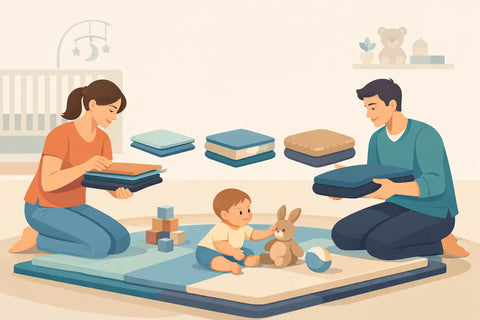
One of the first things parents notice when comparing play mats is how different they feel underfoot. Some look beautiful but seem too thin for daily tumbles. Others feel wonderfully cushioned, yet take up more visual space in the room. This play mat thickness guide is here to make that decision simpler, especially if you are creating a safe, comfortable play area for a baby or toddler at home.
Thickness matters because a play mat is not just a soft surface. It becomes part of your child’s everyday environment - where they roll, sit, crawl, kneel, climb and eventually fall over while learning new skills. The right thickness can improve comfort, reduce the harshness of minor bumps and make floor play more inviting. At the same time, thicker is not automatically better in every home.
Why play mat thickness matters
A play mat sits between your child and a hard floor, so its thickness affects both comfort and confidence. On tile, vinyl or wood flooring, a very thin mat may look neat but can feel unforgiving during tummy time or early crawling. Babies spend a surprising amount of time pressing elbows, knees and little hands into the surface beneath them. If the mat feels too firm, they may become unsettled more quickly.
Thickness also shapes how the mat performs over time. A well-made thick mat with high-density foam usually holds its form better than a softer, low-density option that compresses easily. This is where many parents get caught out. Two mats can have the same stated thickness, yet feel completely different because the internal foam quality is not the same.
For active toddlers, thickness becomes part of everyday impact absorption. It will not replace supervision, and it is not safety equipment in the same category as specialist crash mats, but it can make ordinary slips, stumbles and seated play more comfortable. That is especially useful in busy family homes where children move between play, reading and snack time in the same zone.
A practical play mat thickness guide by stage
For newborns and young babies, comfort during floor time is often the main priority. A mat that is too thin can feel hard during tummy time, especially on tiled floors common in many Singapore homes. In most cases, parents will find that a medium to thick mat gives a more supportive base for daily use.
Once babies start rolling and sitting, a little more cushioning tends to feel worthwhile. This is the stage when small topples happen often, and a thicker mat can soften routine knocks without making the surface unstable. You want a mat that feels secure under the body, not one that sinks so much that movement becomes awkward.
For crawlers and toddlers, thickness needs to work with activity. A good play surface should cushion knees and hands while still feeling firm enough for confident movement. If the foam is too soft, children can lose traction or feel less steady when pulling up to stand. If it is too thin, the floor underneath does too much of the work.
In practical terms, many parents are happiest with a premium mat in the medium-to-thick range rather than the absolute thickest option available. It tends to offer the best balance of softness, support and everyday usability.
How thick should a play mat be?
There is no single perfect measurement for every family, because the right choice depends on your flooring, your child’s age and how the space will be used. That said, very thin mats are usually better suited to light activity or decorative layering than serious everyday baby play.
A thicker, high-density foam mat is often the top choice for homes with hard flooring, especially where babies spend long stretches on the floor. It provides more comfortable support for tummy time, crawling and first attempts at standing. If your child uses the mat several times a day, the added cushioning is usually worth it.
However, thickness should always be considered alongside density. A thinner high-density mat can outperform a thicker low-quality one that flattens quickly. When shopping, parents should look beyond the number alone and consider whether the mat is designed for long-term family use, easy cleaning and reliable daily comfort.
The trade-off between cushioning and stability
This is where a thoughtful purchase makes a real difference. A very thick mat can feel luxurious, but if it is overly soft, it may create a slightly unstable surface for standing toddlers. Children learning to balance often do better on a mat that has some give while still feeling grounded.
On the other hand, a firmer thick mat usually offers the best of both worlds. It softens impact without becoming spongy. That is why premium baby mats often focus on high-density foam rather than just adding more height.
Parents should also think about the adults using the space. If you sit on the floor for feeding, story time or supervised play, thickness affects your comfort too. A mat that supports both parent and child tends to see more daily use, which means the play area becomes a more natural part of family life.
Matching mat thickness to your flooring
Floor type changes what feels comfortable. On tile or stone, a thicker play mat is often the safer and more practical choice because the underlying surface is hard and cold. Extra cushioning helps create a more inviting area for barefoot play and everyday movement.
On engineered wood or vinyl, a medium-to-thick mat is still valuable, though some families may feel they can compromise slightly on depth if the foam density is excellent. On carpet, parents sometimes assume thickness matters less. In reality, carpet is not always enough, particularly for babies doing tummy time or toddlers taking falls near furniture edges. A proper play mat still adds hygiene, structure and a wipe-clean play zone.
Don’t ignore fit, finish and material quality
A well-sized mat that fits neatly within a playpen or dedicated play area can be more useful than a thicker mat with awkward gaps around the edges. This matters if you want a tidy, secure setup rather than a temporary-looking corner of the room. Gap-free combinations are particularly appealing for parents who want a cleaner look and fewer areas where toys, crumbs or little fingers can get trapped.
Material quality matters just as much as thickness. Non-toxic surfaces, easy-clean finishes and anti-slip design all contribute to how safe and convenient the mat feels in everyday use. A beautiful thick mat loses its appeal quickly if it is difficult to wipe down after spills or if it shifts too easily during active play.
For many families, the ideal mat is the one that combines reassuring thickness with practical features - durable foam, a hygienic surface and a finish that sits well within a modern home. That balance is why design-conscious parents often choose specialist baby brands rather than generic marketplace listings.
When a thicker mat is worth paying for
If your baby spends a lot of time on the floor, if your home has hard surfaces throughout, or if you want one mat to last from newborn days into toddler play, investing in a thicker premium mat usually makes sense. The difference is felt every day, not just in comfort but in how confidently you use the space.
A thicker mat can also be worth it if you are trying to avoid constant upgrades. Buying once and buying well often works out better than replacing a flattened, poorly made mat after a short period. For parents furnishing a nursery or play area properly from the start, that kind of durability is part of the value.
This is where a specialist retailer can make the process easier. Brands such as RaaB Family focus on baby-specific products with safety, comfort and modern styling in mind, which helps parents shop with more confidence instead of guessing from product photos alone.
Signs a mat may be too thin for your home
If you can easily feel the hardness of the floor through the mat, it is probably too thin for regular baby play. The same applies if your child seems uncomfortable during tummy time, or if the mat looks compressed after a short period of use.
Another sign is that you keep adding blankets on top. That usually means the mat is not doing enough on its own. While layering may seem like a quick fix, it can create a less stable surface and more washing for parents.
A good play mat should feel ready for use as it is - comfortable, supportive and practical from the first day.
Choosing thickness well is really about choosing how you want the room to work for your family. The best mat is not simply the thickest one on the shelf, but the one that gives your child dependable comfort, supports safe daily play and still looks right in the home you have carefully put together.