
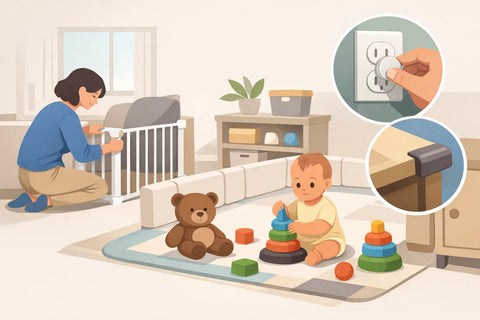
The moment your baby starts rolling with purpose, a casual corner of the home stops being casual. That soft rug by the sofa, the low shelf with decorative items, the side table with sharp edges - all of it suddenly matters. If you are wondering how to baby-proof play area spaces properly, the goal is not to make your home feel clinical. It is to create a safe, comfortable zone where your child can explore freely and you can relax a little more.
A well-planned play area should support movement, reduce everyday hazards and still look at home in a modern interior. For many families, that means choosing practical pieces that are easy to clean, made from non-toxic materials and built to handle daily use without compromising on style.
Start with the floor, not the toys
When parents think about safety, they often begin with gates or corner guards. In reality, flooring is one of the biggest decisions in how to baby-proof play area layouts. Babies spend most of their early play time on the floor - rolling, crawling, sitting, pulling up and falling back down.
Hard tiles, slippery surfaces and thin rugs do not offer much protection. A high-density foam play mat with an anti-slip base gives a more stable and cushioned surface for movement. This matters not only for comfort, but for confidence too. Babies are more likely to practise crawling and standing when the surface feels supportive rather than slick.
Thickness matters, but so does material quality. Look for mats made from non-toxic, baby-safe materials that are simple to wipe down after snacks, spills or nappy leaks. In smaller homes or flats, where the play area may be part of the living room, a mat also helps define the zone without making the space feel cluttered.
How to baby-proof play area layouts at home
The safest play area is not always the largest one. It is the one with clear boundaries and fewer hidden risks. Start by getting down to your baby’s level. Crawl around the intended space and look for anything within reach, at eye level and just above it. Parents often spot hazards more quickly from this angle.
Cables should be fully tucked away or covered. Plug sockets need proper protectors. Small decor items, remote controls, coins, pet bowls and charging accessories should be removed entirely. If there is a bookshelf or storage unit nearby, it should be fixed securely to the wall. Even low furniture can become a tipping risk once babies start pulling themselves up.
If your play area sits near a television console, window, balcony door or staircase, it is usually worth adding another layer of separation. A playpen can work especially well for this, provided it is spacious enough for active play and paired correctly with the mat inside. Gap-free compatibility matters more than many parents realise. If there is space between the play mat and the frame, tiny hands and feet can get caught.
Choose furniture with safety built in
Not every nursery or living room item belongs beside a baby play zone. Lightweight stools, unstable side tables and decorative storage baskets with exposed handles can all become hazards in active spaces. The better approach is to choose furniture designed for family use - sturdy, easy to clean and free from unnecessary sharp points.
Rounded edges are helpful, but they are only part of the picture. Stability, finish quality and material safety matter just as much. A storage unit should not wobble when touched. A changing station near the play area should have a sensible layout that keeps creams, wipes and smaller items out of reach. If furniture includes drawers or doors, soft-close features can reduce pinched fingers.
This is where many parents prefer specialist baby brands over general furniture retailers. Products designed specifically for nursery and child-safe spaces tend to account for real use: climbing, leaning, mouthing, spills and constant cleaning.
Keep the play area contained, but not restrictive
A baby-proofed space should support independence, not limit it too heavily. If the area is too crowded, babies have less room to practise movement. If it is too open, they can quickly reach household hazards outside the intended zone.
For younger babies, a compact area with soft flooring and a few carefully chosen toys may be enough. Once crawling begins, many families benefit from a playpen or enclosed play space. This can be especially practical in open-plan homes, where kitchens, dining areas and living zones blend together.
The key is choosing a setup that fits your routine. If you need a secure place for short supervised play while you prepare meals or answer the door, an enclosed play area makes sense. If you mainly sit and play alongside your child, an open mat-based zone may be enough, provided the surrounding room is properly secured.
There is no single perfect layout. It depends on your baby’s age, your floor plan and how the family actually uses the space.
Prioritise cleanability and hygiene
Babies explore with their hands, faces and mouths. That makes hygiene part of safety. In a play area, fabric-heavy surfaces can look cosy but may be harder to keep fresh, especially in humid conditions. Easy-clean mats, wipeable playpen surfaces and storage that does not trap dust can make daily maintenance far more manageable.
This matters even more in homes where the play area is used from morning to evening. Snack crumbs, dribble, milk splashes and the occasional nappy accident are part of normal family life. Choosing materials that clean up quickly helps keep the area pleasant without adding to your workload.
Antibacterial surfaces can be a strong advantage, but they should not replace regular cleaning. Think of them as one useful feature within a broader safety standard. The best products combine hygiene, durability and comfort rather than focusing on a single claim.
Do not overlook what happens above baby height
One of the easiest mistakes in baby-proofing is thinking only about what your child can reach today. Babies develop quickly. The shelf that seems high enough this month may be within reach very soon once standing starts.
Wall art should be firmly mounted. Curtain cords must be kept completely out of the way. Tablecloths are best avoided near the play zone, as they can be pulled down along with anything on top. If there are blinds, make sure operating cords are secured. Even a nearby floor lamp can become unsafe if it is unstable or has an exposed cable.
When deciding how to baby-proof play area spaces, think one stage ahead. It saves time, reduces repeated adjustments and creates a more reliable setup as your baby grows.
Toy storage should support safe habits
Too many toys on the floor can create as much risk as too few safety measures. Babies need room to move, and parents need a space that can be reset quickly. Good storage helps both.
Use low, stable storage for larger toys and keep smaller items sorted separately, especially anything with parts that could become a choking risk for younger siblings. Open-top bins can be convenient, but they should be soft-edged or lightweight enough not to cause injury if pulled over.
Rotating toys rather than displaying everything at once can make the space calmer and easier to manage. It also helps parents notice wear and tear. Broken parts, peeling surfaces and loose fittings should be removed immediately.
Safety products should still suit your home
Parents should not have to choose between a safe play area and a home that feels put together. Design-conscious baby products are not just about appearance. If an item works well with your interior, you are more likely to keep it in daily use rather than moving it aside when guests come over or when the room feels crowded.
That is why modern families often favour coordinated systems - playpens and mats designed to fit together properly, storage that complements nursery furniture and finishes that sit comfortably within a contemporary home. RaaB Family takes this approach seriously, with safety-centred products that also respect how families want their homes to look and function.
A baby play area does not need to be oversized or filled with gadgets. It needs soft, supportive flooring, secure boundaries, stable furniture and materials you trust. Once those foundations are in place, the space starts doing what it should: giving your child room to grow, and giving you a little more peace each day.