
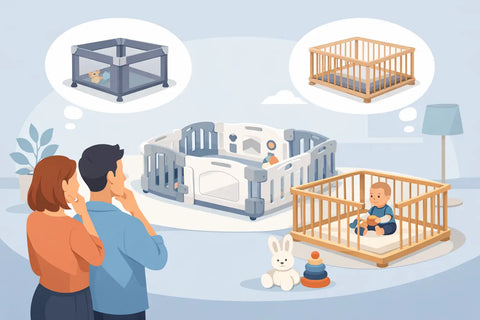
The moment your baby starts rolling with purpose, your living room changes. Corners look sharper, coffee tables feel closer, and the floor suddenly matters much more than it did a few weeks ago. If you are working out how to choose a baby playpen, the right answer is rarely the cheapest or the largest. It is the one that creates a safe, comfortable play space that suits your home, your routine, and the way your child is growing.
A good playpen gives parents something genuinely valuable - peace of mind. But not all playpens are built the same, and the differences are more than cosmetic. Safety standards, panel height, materials, flooring compatibility, and how well the playpen fits into your daily family life all make a real difference.
How to choose a baby playpen for your home
Start with the space you actually have, not the space you wish you had. In many Singapore homes, every square metre counts, so a playpen needs to earn its place. Measure the area where you plan to use it, then think about what sits around it. A playpen placed near a television console, curtain cords, shelving unit, or side table may still leave hazards within reach if the gaps are too close.
The best fit is not always wall-to-wall. Parents often assume a bigger playpen is automatically better because it gives the baby more room. That can be true, but only if it still allows comfortable movement around the room and does not make the space feel cramped. A playpen that overwhelms the living area can quickly become inconvenient, which often means it gets used less.
Shape matters too. Some families do well with a rectangular format because it sits neatly against furniture lines and leaves clearer walkways. Others prefer a squarer footprint that creates a more central play zone. If you are pairing it with a dedicated mat, precise sizing becomes even more important. A gap-free combination between playpen and mat is a small detail that has a big effect on safety, cleanliness, and visual neatness.
Safety should lead every decision
When parents ask how to choose a baby playpen, safety should come before style, price, or extras. A beautiful design means very little if the structure feels unstable or the materials are not reassuring.
Look first at the frame and locking mechanism. The playpen should feel secure when assembled, with no wobble, loose joints, or panels that shift too easily. If it folds or expands, the mechanism should be firm and adult-friendly rather than easy for a child to interfere with.
Panel height is another practical point. Babies develop quickly, and what feels contained at six months may feel climbable later on. A playpen should offer enough height to discourage early attempts at climbing while still allowing visibility for both parent and child.
Material safety matters just as much as structural safety. Choose non-toxic materials and finishes, especially because babies explore with their hands and mouths long before they understand boundaries. Smooth surfaces, rounded edges, and easy-clean materials are worth prioritising. In a product category this close to daily contact, peace of mind comes from details.
If safety certifications are available, they are worth paying attention to. They help separate nursery specialists from generic sellers and give parents greater confidence that product claims are backed by recognised testing rather than marketing language alone.
The floor inside the playpen matters more than many parents expect
A playpen is only part of the setup. The surface inside it affects comfort, hygiene, and how confidently your baby can move.
If your flooring is hard tile or timber, a thick, supportive mat makes a clear difference. It softens tumbles during crawling and standing practice, offers better insulation from cold floors, and creates a more inviting place for longer play sessions. Thin mats may look tidy, but they do not provide the same cushioning or support.
This is where compatibility matters. A playpen and mat that are designed to fit together neatly can help avoid edge lifting, awkward gaps, and shifting surfaces. That cleaner fit is not only more polished in appearance, it is easier to maintain and safer for active little ones.
Choosing the right material and finish
Playpens tend to be made from plastic, wood, mesh, or mixed materials, and each comes with trade-offs.
Plastic playpens are popular because they are lightweight, easy to wipe down, and often simple to reconfigure. For many families, they suit everyday use well, especially in humid conditions where easy cleaning is a major advantage. The downside is that quality can vary widely. Better-made versions feel sturdy and refined, while lower-grade options can feel flimsy or look out of place in a carefully styled home.
Wooden playpens appeal to parents who want a more premium furniture look. They often sit beautifully in modern interiors and can feel more substantial. But they are usually heavier, sometimes less flexible in layout, and need close attention to finish quality and cleaning practicality.
Mesh travel-style playpens are useful for portability and occasional use, though they are not always the top choice for a permanent play zone in the main living area. They may be ideal for grandparents' homes, short stays, or families who need something compact. For daily use, some parents find them less visually integrated and less convenient to step into or arrange with mats and toys.
The right choice depends on how permanent your setup will be. If your playpen is becoming part of your home every day, design and material quality tend to matter more over time.
Think about your routine, not just your baby
A playpen should support family life, not complicate it. That means looking beyond age range and considering how you will use it on a normal weekday.
If one parent is often managing meals, calls, or household tasks while supervising the baby, visibility is key. A playpen with open, easy sightlines can help you keep a close eye on play while moving around the room. If grandparents or helpers will also use it, setup should be intuitive and secure without being fiddly.
Cleaning is another major factor. Babies snack, drool, throw toys, and have the occasional nappy mishap in places you did not expect. Easy-wipe panels and hygienic surfaces save time and reduce stress. In a humid climate, materials that resist trapping odours and are simple to sanitise are especially helpful.
Mobility can be useful, but it is not always essential. Some families want a lightweight option they can shift from living room to bedroom. Others benefit more from a stable, dedicated setup that stays put. Neither is better in every case. It depends on whether your home routine changes often or runs best with fixed zones.
How to choose a baby playpen that still looks right at home
Parents should not have to choose between safety and aesthetics. A playpen lives in one of the most visible parts of the home, so appearance matters more than some people admit.
Clean lines, soft neutral tones, and a well-proportioned design tend to work best in contemporary interiors. Scandinavian-inspired styling is popular for a reason - it feels calm, uncluttered, and easy to blend with existing furniture. For many families, that makes the playpen feel less like a temporary baby item and more like a considered part of the home.
That said, style should never cover up poor function. A playpen can look premium in photos and still disappoint in daily use if the gate is awkward, the base is unstable, or the material feels cheap. The strongest choices balance visual appeal with practical reassurance.
What is worth paying more for
Price matters, especially when you are furnishing multiple parts of a nursery or family space at once. But with playpens, there are areas where spending a little more often gives better long-term value.
Sturdier construction, safer materials, better finishing, and a properly compatible mat setup are usually worth the difference. These are the features you notice repeatedly, not just on delivery day. A well-made playpen tends to stay looking better, feel more secure, and support longer daily use.
Where parents can sometimes save is on gimmicky extras. Toy attachments, novelty features, or overly complex reconfiguration options may sound appealing at first but do not always improve real use. In most homes, dependable safety, comfort, and easy maintenance matter far more.
If possible, seeing the product in person can help confirm whether the quality matches the promise. That is especially useful for parents who want the confidence of inspecting size, finish, and sturdiness before buying. For a specialist baby brand such as RaaB Family, that combination of online convenience and showroom reassurance gives families a more confident way to choose.
The right playpen should make daily life feel calmer. Not because it solves every parenting challenge, but because it gives your baby a secure place to play, explore, and grow while fitting naturally into the home you have built for them.