
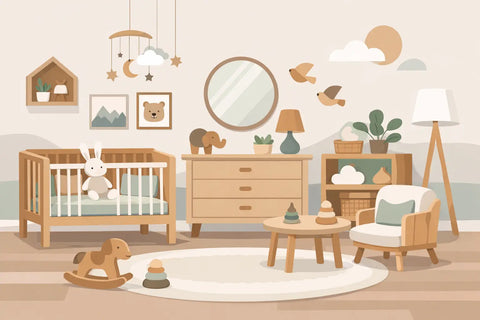
A nursery can look calm in a photo and still feel awkward at 2am. That is usually where good design proves itself. Scandinavian style nursery furniture has become a favourite for parents because it does more than look tidy - it helps the room work harder, feel lighter and stay useful as your child grows.
For many families, especially in space-conscious homes, the appeal is practical as much as visual. Clean lines make a room feel less crowded. Soft neutral tones sit comfortably with modern interiors. More importantly, the best pieces are built around daily routines - safe sleep, easy nappy changes, quick clean-ups and storage that keeps clutter from taking over.
What Scandinavian style nursery furniture really means
The phrase gets used loosely, but true Scandinavian style nursery furniture is not simply pale wood and white paint. At its best, it combines simplicity, function and comfort. Every piece should earn its place in the room.
That means furniture with balanced proportions, a calm colour palette and thoughtful details such as rounded edges, stable construction and finishes that are easy to wipe clean. It also means avoiding overdesigned pieces that look charming for a short season but become impractical once the nursery is in full use.
There is also a quality aspect that matters to parents. Scandinavian-inspired furniture tends to favour durable materials, understated styling and a less-is-more approach. In a nursery, that often translates into products that feel timeless rather than trend-led, which is useful if you plan to reuse them for another child or pass them on within the family.
Why this style works so well in nurseries
A baby’s room needs to do several jobs at once. It should be restful enough for sleep, efficient enough for feeding and changing, and flexible enough to adapt as routines shift. Scandinavian styling supports that balance because it removes visual noise.
A room full of bright competing furniture can feel busy before the toys, muslins and laundry even arrive. Lighter woods, muted shades and simple silhouettes create a calmer base. That does not mean the nursery has to feel cold. Texture makes the difference - cushioned play mats, soft bedding, woven baskets and upholstered seating add warmth without making the room feel crowded.
There is another advantage parents often appreciate after the first few months. Minimal furniture is easier to maintain. Fewer awkward grooves, heavy ornamentation and bulky details mean less dust, simpler cleaning and less visual mess when life gets hectic.
Choosing Scandinavian style nursery furniture by priority
The safest nursery is not always the one with the most furniture. It is the one with the right furniture, chosen in the right order. Start with the essentials and build from there.
The cot comes first
Your cot is the anchor of the room, both visually and practically. In Scandinavian-inspired nurseries, the best cots usually feature clean slats, natural timber tones or soft painted finishes, and a shape that does not dominate the space.
Looks matter, but safety matters more. Check for sturdy construction, non-toxic materials and finishes, and dimensions that suit your mattress properly. A premium cot should feel solid, stable and built for repeated daily use. If the design includes adjustable mattress heights or converts for later stages, that is a useful bonus, though it depends on how long you plan to keep it.
A changing station should make daily care easier
Changing units are one of the clearest examples of form needing to follow function. A beautiful chest that is the wrong height or offers poor storage will frustrate you quickly. Scandinavian designs often work well here because they are straightforward - drawers that open smoothly, shelves that keep essentials close, and surfaces that are easy to clean.
If space is limited, a compact changing table or dresser-top solution may be the smarter choice. If you have a dedicated nursery, a larger unit with built-in storage can reduce clutter across the room.
Storage matters earlier than most parents expect
Babies arrive with more things than most first-time parents imagine. Blankets, clothes, nappies, swaddles, bath items and later toys can fill a room quickly. Scandinavian style nursery furniture usually handles this well because storage is treated as part of the design, not an afterthought.
Look for pieces that keep everyday items accessible but hidden enough to preserve a calm look. Open shelving can be useful for baskets and frequently used items, while drawers help the room stay visually organised. The right balance depends on your habits. If you prefer everything tucked away, prioritise closed storage. If you want quick access during busy routines, a mix of both often works best.
Materials, finishes and safety standards
A nursery may be one of the smallest rooms in the home, but it deserves some of the highest standards. Babies spend long periods close to mattresses, cot rails, play surfaces and changing areas, so material quality should never be treated as a small detail.
Solid, stable construction is essential, but so are non-toxic finishes and child-safe materials. Smooth edges, reliable fittings and wipe-clean surfaces all support easier, safer daily use. For parents shopping online, this is where retailer trust matters. Clear product information, safety focus and specialist knowledge make a real difference when you cannot assess every detail in person straight away.
Eco-conscious materials are another strong fit for this style. They support the Scandinavian design philosophy naturally, but they also answer a practical concern for modern families who want to make more careful purchasing decisions. That said, natural materials still need to be durable. Soft aesthetics should not come at the expense of performance.
How to style the room without losing function
A Scandinavian nursery should feel restful, not sparse. The easiest way to get this right is to keep the furniture base simple and layer comfort around it.
Start with a restrained palette - whites, warm greys, beige, taupe and natural wood are dependable choices. Then add softness through textiles and floor comfort. In nurseries and play areas, thick cushioned mats are especially useful because they bring warmth, support tummy time and help create a safer play zone. If a mat fits neatly with a playpen system, that is even better, as poor gaps and mismatched sizes can quickly become an annoyance.
Lighting also matters more than many people expect. Gentle warm light supports late-night feeds and keeps the room from feeling stark. You do not need many decorative items. A few carefully chosen pieces, such as framed prints, soft toys or a well-made mobile, usually create a more polished result than filling every shelf.
Scandinavian style nursery furniture for smaller homes
This style is particularly well suited to compact spaces because it relies on proportion and restraint. In a smaller nursery, bulky furniture can make the room feel boxed in before daily essentials are added.
Choose pieces that offer clear function without oversized frames. A cot with an airy slatted design, a streamlined changing station and smart vertical storage will usually make the room feel more open. Light wood finishes and pale tones help bounce light around the space, which is useful in homes where natural light is limited.
It is also worth thinking about how the nursery connects with the rest of your home. For many parents, especially in modern city living, the nursery is not a standalone showpiece. It is part of a wider family space. Scandinavian-inspired pieces tend to blend more easily into adjoining bedrooms and shared living areas, which helps if your layout needs to evolve over time.
When trends are worth following and when they are not
There is a reason this look has staying power. It is not tied to a single season, and it ages well. That makes it a safer investment than highly themed nursery furniture, which can feel dated quickly.
Still, not every trend under the Scandinavian umbrella is equally useful. Very pale finishes can look beautiful, but some may show marks more easily. Ultra-minimal rooms can appear elegant, but they may feel less warm if texture is missing. Open storage is attractive in photos, but closed storage often wins in real family life.
The best approach is to borrow the principles rather than copy a showroom image exactly. Prioritise safety, comfort, durability and ease of maintenance first. Then choose the style details that suit your home and your routine.
For parents who want a nursery that feels calm, premium and genuinely liveable, Scandinavian style nursery furniture remains a strong choice. It offers a thoughtful balance of beauty and practicality, which is exactly what a baby room should provide. When the furniture supports your day instead of complicating it, the whole space feels more reassuring from the start.