
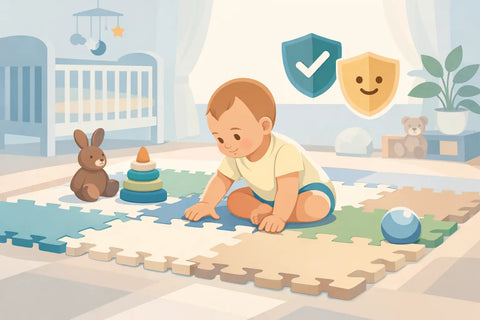
The moment your baby starts rolling with purpose, the floor stops being just part of the room and starts becoming their main play space. That is usually when parents ask the right question: are foam play mats safe? The short answer is yes, they can be, but only when the material quality, chemical safety, surface design and overall construction meet a high standard.
A foam play mat is not simply a soft place to sit. It is where babies learn to lift their heads, crawl, tumble, stand and fall. It needs to cushion movement, support hygiene and fit naturally into family life. For many parents, the concern is not whether foam mats are useful, because they are. The real issue is knowing which ones are genuinely safe and which ones only look reassuring on the surface.
Are foam play mats safe when you look past the label?
Not all foam mats are made to the same standard. Two mats can appear almost identical online, yet differ significantly in density, finish, odour, durability and the substances used during manufacturing. That is why safety should never be judged by thickness alone or by a simple claim that a product is "non-toxic".
A safe foam play mat should begin with child-conscious materials. Parents should look for mats that are free from harmful substances commonly associated with lower-grade foam products, such as formamide, heavy metals and certain phthalates. Reputable products will usually be tested to recognised safety standards, and brands that take safety seriously are transparent about those certifications rather than vague about them.
The texture and finish matter too. A mat should provide grip without feeling harsh on delicate skin. If the surface is too slippery, early walkers may lose confidence. If it is too rough, tummy time becomes less comfortable. A good mat balances support, comfort and anti-slip function in a way that works for real daily use.
What makes a foam play mat safer?
The best way to think about mat safety is to break it into four practical areas: material safety, physical protection, hygiene and long-term durability. Parents often focus on the first point, but all four shape how safe a mat actually is over time.
Material safety comes first
The most immediate question is what the foam is made from and what it may release into your home. A strong chemical smell is often a red flag, especially with newly opened products. While some light packaging odour can fade, a harsh or lingering smell deserves caution. Babies spend a great deal of time close to the mat surface, often face down, and they explore with their hands and mouths. That makes low-emission, tested materials especially important.
High-quality foam mats are typically designed to avoid problematic additives and to comply with recognised testing standards for children’s products. If a seller cannot clearly explain the material composition or safety testing, that is worth noticing.
Cushioning should protect without becoming unstable
Parents often assume softer means safer, but that is not always true. A play mat needs enough density to absorb impact from crawling, kneeling and minor tumbles, yet still provide a stable base for sitting and standing. If the foam is too soft, babies may sink in slightly and find it harder to balance. If it is too thin or too firm, there is less protection from knocks on tile or hardwood floors.
This is where higher-density foam makes a difference. It tends to hold its shape better, feel more supportive and provide more consistent cushioning over time.
Hygiene matters more than many expect
A mat can be chemically safe and still become less safe in practical use if it is difficult to clean. Babies drool, snack, spit up and crawl everywhere. A surface that traps moisture or dirt can quickly become unpleasant. Easy-clean, water-resistant finishes help parents keep the play area fresh without much fuss.
In humid homes, this matters even more. A mat that wipes clean easily and dries quickly supports a healthier environment and makes daily maintenance more realistic.
Durability is part of safety
A foam mat that peels, cracks or compresses too quickly can become a problem. Worn surfaces are harder to clean and may create uneven areas that affect balance. Flaking top layers are especially frustrating in a baby product because they suggest the mat may not hold up to normal family use.
Premium-quality mats cost more for a reason. Better construction usually means the mat keeps its structure, finish and comfort for longer, which protects both your child and your purchase.
Are foam play mats safe for newborns and toddlers alike?
They can be, but the way you use them changes with your child’s age. For newborns, the main benefit is creating a clean, cushioned space for supervised floor time. Babies are not covering much ground yet, but they are spending time stretching, wriggling and learning head control. A supportive, hygienic mat gives parents peace of mind during those early months.
For older babies, safety becomes more active. Crawlers need traction. Pull-to-stand babies need a stable surface underfoot. Toddlers need cushioning for the frequent little falls that come with movement and confidence. In that sense, a well-made foam play mat can continue to support development through several stages.
The key point is supervision. No play mat replaces attentive adult oversight, and no soft flooring makes rough play risk-free. A mat improves the environment, but it does not remove the need for sensible setup and watchful care.
What parents should check before buying
When choosing a mat, product information should feel specific, not fuzzy. Look for clear details on safety testing, material composition, thickness, density and cleaning method. Brands that specialise in baby products tend to explain these points far better than general marketplace sellers.
It is also worth thinking about fit. A mat that works neatly with your room or playpen setup is more likely to stay flat and secure in daily use. Poorly fitted mats, gaps between surfaces or edges that lift can make a play area feel less safe and less polished. This is one reason many parents prefer a coordinated play system rather than mixing unrelated pieces.
Design should not be dismissed as a luxury either. If a mat looks good in your living space, you are more likely to keep it out and use it consistently. That means more floor time, easier routines and less disruption for both parent and child.
Common concerns about foam mats
One of the most common worries is whether babies may chew or lick the surface. That concern is understandable because babies mouth everything. While a safe mat should be made from child-conscious, tested materials, it is still best treated as a floor product rather than a teether. Keep the surface clean and redirect chewing when possible.
Another concern is whether foam mats trap heat. In most home settings, a quality mat should feel comfortable rather than overly warm, but room temperature and clothing still matter. If your child seems sweaty during play, it may be worth adjusting layers or airflow rather than blaming the mat alone.
Parents also ask whether puzzle mats are as safe as single-piece mats. The answer depends on construction and finish. Puzzle styles can be practical, especially for flexible room sizes, but more joins can mean more places for dirt to collect and more opportunities for edges to shift. A well-made one-piece or foldable design often feels simpler to maintain, while a premium puzzle mat can still perform well if it locks securely and cleans easily.
When a foam play mat may not be the right choice
There are situations where a foam mat is helpful but not ideal on its own. If your floor area includes sharp furniture corners, unstable décor or heavy items within reach, the mat addresses only part of the risk. The wider play space still needs proper child-proofing.
Some parents also expect a mat to function as a mattress substitute, which it should not. A play mat is designed for supervised play and everyday floor comfort, not for unsupervised sleep. That difference matters.
And if a mat has an overpowering smell, visible damage on arrival or vague safety claims, it is sensible to move on. Peace of mind starts with trusting the product in front of you.
Choosing with confidence
For most families, foam play mats are a smart and safe choice when selected carefully. They cushion movement, support development, make floor play more comfortable and help create a clean, inviting area for babies and toddlers. The safest options combine tested non-toxic materials, high-density foam, easy-clean surfaces and reliable construction that lasts.
At RaaB Family, this is exactly why parents are drawn to thoughtfully designed play mats that balance safety, comfort and modern styling. A good mat should do more than soften the floor. It should help you feel confident each time you set your child down to play, explore and grow.