
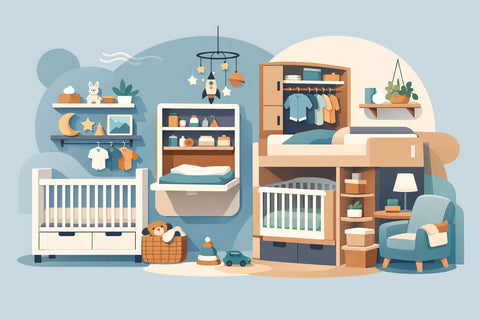
Small nurseries rarely feel small until the essentials start arriving. A cot, changing area, nappies, muslins, blankets, clothes in three sizes, a play mat, feeding supplies - suddenly the room needs to work much harder than its floor plan suggests. The best space saving nursery ideas are not about squeezing in more for the sake of it. They are about choosing pieces that feel safe, calm and genuinely useful, so daily routines stay easy even in a compact home.
For many families, especially in city homes and flats, the challenge is not simply storage. It is creating a nursery that still feels restful, hygienic and well organised while leaving enough open room to move comfortably with a baby in your arms. That balance matters more than any trend.
Space saving nursery ideas start with layout
Before buying another basket or shelf, look at how the room will actually be used. Parents often think in terms of furniture first, but the better approach is to map the routines - sleeping, changing, feeding, dressing and floor time. Once those zones are clear, it becomes easier to avoid duplicate furniture and awkward dead space.
Keep the cot in the position with the best airflow and easiest access from both the door and your bedside route if you will be carrying baby in at night. The changing station should sit near storage, not across the room from it. A play area works best where there is open floor space, rather than tucked into a tight corner where supervision is harder.
In smaller rooms, circulation matters. If a drawer cannot fully open because it hits the cot, that storage is less useful than it looks. If a cupboard door blocks the changing area, every nappy change becomes more frustrating than it needs to be.
Choose furniture that earns its footprint
One of the smartest space saving nursery ideas is to avoid single-purpose furniture unless you truly have the room. A changing table can be helpful, but in many nurseries a compact changing station with shelves or drawers below does more with the same footprint. Likewise, a cot with under-bed storage can reduce the need for a separate chest.
This is where quality matters. Multi-functional furniture only works if it is sturdy, safe and designed for repeated daily use. Parents should not have to choose between saving space and having confidence in the product. Stable construction, non-toxic materials and easy-clean surfaces are worth prioritising because these pieces work harder in a compact nursery.
There is also a design advantage. Fewer, better pieces create a room that feels visually calmer. That can make a small nursery appear larger than one filled with several small items competing for space.
Look for vertical storage, not wider storage
When floor area is limited, the obvious temptation is to line the room with low furniture. In practice, that can make the nursery feel crowded and chopped up. Vertical storage often performs better. A tall, slim shelving unit or narrow cabinet uses less floor space while keeping essentials easy to reach.
The trade-off is accessibility. Higher shelves should hold backup stock, keepsakes or items used less often, while daily essentials remain at adult waist height. Anything heavy or frequently grabbed should not live overhead. In a nursery, convenience should never come at the expense of safety.
Use the wall without overloading it
Walls can carry more than décor. Peg rails, shallow shelves and wall-mounted organisers can free up drawers and floor baskets, particularly for lighter items such as muslins, bibs, story books or small toiletries. This works especially well above a changing area, where supplies need to be close but not in baby’s reach.
That said, restraint matters. Too many wall fixtures can make a small nursery feel busy, and visually busy rooms tend to feel smaller. Choose a few placements that support your routine rather than covering every spare surface.
A cleaner, more premium look often comes from matching storage styles rather than mixing too many colours, textures and box sizes. Scandinavian-inspired nursery design remains popular for good reason - it helps compact rooms feel airy, tidy and timeless.
Under-cot and under-chair space should not go to waste
Some of the most useful storage in a nursery is the least visible. Under-cot drawers or lidded boxes can hold spare fitted sheets, larger clothing sizes, unopened wipes or extra bedding. The same goes for the space under a nursing chair if the room includes one.
Hidden storage is especially helpful for maintaining that calm, uncluttered feeling. Parents still have what they need, but the room does not look overloaded. In a nursery, visual order makes a real difference. It is easier to clean, easier to move around safely and easier to settle into those repetitive day-and-night routines.
If you use under-furniture storage, choose containers that slide out smoothly and are easy to wipe clean. Soft fabric bins can look attractive, but rigid options often hold their shape better and cope more reliably with daily handling.
Keep the changing area compact and efficient
Changing stations often become clutter magnets because they attract every cream, wipe packet and spare nappy in the house. A better setup is deliberately limited. Keep only what is needed for the next few days within immediate reach, then store refills elsewhere.
A compact changing station with shelves or baskets can be enough for most nurseries, particularly when paired with nearby backup storage. This reduces visual clutter and encourages a more hygienic system, since products are easier to monitor and rotate.
Parents in smaller homes may also benefit from a changing setup that can evolve later. Once nappy changes become less frequent, that same unit can continue as general nursery storage. This is often a better long-term investment than a large dedicated table with little use beyond the early months.
Space saving nursery ideas for clothes and soft items
Baby clothes are small, but they multiply quickly. The easiest way to lose nursery space is to store every size, season and gifted outfit in the same area. Keep only the current size and a small number of next-size essentials in the nursery. Everything else can be boxed, labelled and stored elsewhere.
Drawer dividers help more than many parents expect. They prevent tiny items from becoming one messy pile and make it easier to see what you already have. That can reduce overbuying as well as clutter.
For blankets, swaddles and towels, think in terms of realistic use. If you reach for the same few items daily, the rest can live in a higher shelf or secondary cupboard. Prime nursery space should go to what supports your routine now, not what might be useful eventually.
Make floor space work harder, not disappear
Every nursery needs some open floor area. This is not empty space that needs filling. It is functional space for tummy time, play, dressing and simply moving safely around the room.
A well-fitted play mat can define that zone without adding bulk. In compact nurseries, it helps to choose a mat that is easy to clean, hygienic and comfortable enough for regular use, rather than layering several soft furnishings that create more washing and more visual clutter. Thick, high-density foam mats can offer comfort while still keeping the room neat, particularly when they fit the space properly instead of leaving awkward gaps.
This is one area where precision matters. If you are pairing a mat with a playpen or setting up a contained play corner, compatibility can make a noticeable difference to both safety and appearance. A gap-free fit keeps the area tidier and more secure.
Limit décor that steals storage potential
Nurseries should feel warm and personal, but decorative choices can quietly take over valuable space. Freestanding lamps, oversized baskets that hold very little, bulky side tables and purely decorative stools all use room that could support a safer, more practical setup.
That does not mean the nursery must feel plain. Texture, soft colour palettes and a few well-chosen accents can still create a beautiful result. The key is to let functional pieces do some of the visual work. A well-made cot, an elegant storage unit and neatly arranged essentials often create a more polished room than extra ornamentation.
For gift buyers helping to furnish a nursery, this is worth remembering. The most appreciated pieces are usually the ones parents use every day.
Think ahead to the next six months
Good nursery planning is not only about fitting everything in today. Babies change quickly, and rooms that are packed to capacity from day one can become impractical just as fast. Leave room for growth, whether that means storing the next clothing size, adding a more active play area or adjusting the layout once your baby becomes more mobile.
This is why the best space saving nursery ideas are usually the simplest. Buy fewer items, choose better materials, favour storage that is easy to clean, and prioritise furniture with a clear purpose. If a product saves space but creates hassle, it is not really saving anything.
For parents creating a compact nursery, confidence comes from knowing the room works safely and smoothly every day. A well-planned small space can feel every bit as premium, comfortable and practical as a larger one. At RaaB Family, that is exactly the standard worth aiming for - a nursery that supports real family life beautifully, without asking for more room than your home can spare.