
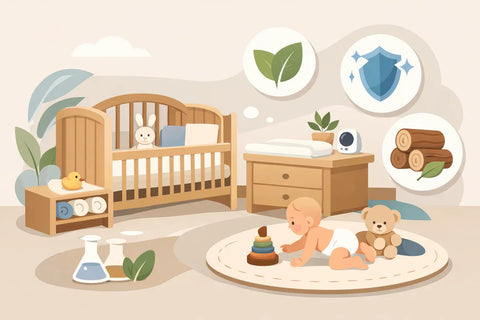
The cot may look beautiful, the play mat may suit your décor, and the storage unit may fit perfectly in the nursery - but for most parents, the real question is simpler. Are the materials genuinely safe for daily contact, sleep, play, and all the chewing, touching, and mess that come with early childhood? Understanding safe baby furniture materials helps you buy with more confidence and avoid products that only look reassuring on the surface.
A nursery is one of the few spaces in the home where design and safety have to work equally hard. Babies spend long periods close to furniture surfaces, mattresses, rails, and floor padding. That makes material choice more than a style decision. It affects indoor air quality, ease of cleaning, durability, and how well each piece holds up over time.
What safe baby furniture materials really means
When parents hear the term safe, they often think only about sharp corners or stable construction. Those points matter, but material safety goes further. It includes what the furniture is made from, what it is coated with, how it performs with heat and humidity, and whether it releases unwanted chemicals into the room.
For baby furniture, safer materials are generally those that are non-toxic, low in emissions, durable under regular cleaning, and suitable for close daily contact. They should also be appropriate for the product category. A cot, for example, needs strong structural integrity and a reliable finish. A play mat needs cushioning, hygiene, and a surface that is easy to wipe down without degrading too quickly.
This is where parents often need a more balanced view. No material is perfect in every situation. Solid wood may feel premium and reassuring, but the finish still matters. Engineered boards can be practical and cost-effective, but quality varies greatly depending on adhesives and manufacturing standards. Foam can be comfortable and protective, yet density and chemical formulation make a significant difference.
Safe baby furniture materials for cots and nursery furniture
Solid wood remains a top choice for many parents because it is sturdy, long-lasting, and timeless in appearance. Hardwoods and quality softwoods can both work well, provided the product is properly finished and built to recognised safety standards. A well-made wooden cot or changing unit usually offers the combination parents want most - durability, stability, and a clean, modern look that suits the rest of the home.
The point to watch is not just the wood itself but the treatment applied to it. Paints, stains, lacquers, and sealants should be low-VOC or non-toxic, especially in enclosed nursery spaces. VOCs, or volatile organic compounds, are chemicals that can be released into the air over time. Lower-emission finishes are a better choice for babies, who are more sensitive to indoor environmental conditions.
Engineered wood products such as MDF or plywood are common in baby furniture as well. These can be safe and practical when sourced from reputable manufacturers using controlled, low-emission adhesives and tested finishes. They also allow for smooth painted surfaces and consistent construction. The trade-off is that not all engineered boards are equal. Cheaper products may use lower-grade adhesives or coatings, so it is worth looking for clear material information rather than assuming all nursery furniture is made to the same standard.
Metal furniture appears less often in nurseries, but it can be a suitable option in selected frames or components. Powder-coated metal, for example, can be durable and easy to maintain. What matters is that coatings are baby-safe, edges are properly finished, and the design does not introduce trapping or pinching risks.
Why finishes and coatings matter as much as the core material
Parents often focus on whether a piece is wooden or metal, yet the finish is often the first thing a baby touches. It is also the part most likely to be mouthed, scratched, or cleaned repeatedly. That makes coatings one of the most important parts of the buying decision.
Look for water-based, non-toxic, or low-VOC finishes where possible. These are generally a more reassuring choice than heavily solvent-based coatings. Smoothness matters too. A finish should not chip, peel, or flake easily, especially on cot rails and furniture edges.
This is one area where premium-quality baby furniture often justifies the investment. Better finishes tend to hold up more reliably under real family use. Frequent wiping, changing humidity, and everyday knocks can quickly expose weaker coatings. If the finish degrades, both appearance and safety can suffer.
Safer materials for play mats and padded surfaces
Floor time starts early, so the materials used in play mats and padded furniture deserve close attention. Babies lie face down, roll, crawl, and play directly on these surfaces. Hygiene and cushioning matter, but so does the material composition underneath the cover.
High-density foam is often preferred for play areas because it provides better support and shape retention than lower-quality foam. A thicker, well-made foam mat can help cushion tumbles while remaining comfortable for supervised play. It should also recover well after daily use rather than flattening too quickly.
The outer layer is just as important. Parents generally benefit from surfaces that are wipe-clean, water-resistant, and free from harsh chemical odours. In a humid environment such as Singapore, easy cleaning is not a small convenience. It helps parents manage spills, milk drips, nappy mishaps, and general household dust without turning routine maintenance into a major task.
Anti-slip backing or integrated anti-slip design also adds practical safety. A mat that moves too easily can create its own hazard, especially once babies become active crawlers and toddlers.
What to ask before you buy
Good product pages and showroom displays should do more than describe size and colour. They should give parents material clarity. If key details are vague, that is usually worth noticing.
Start with the basics. Ask what the product is made from, what finish has been used, and whether it has been tested to relevant safety standards. For padded products, ask about foam density, surface materials, and whether the cover is designed for regular cleaning. For nursery bundles, check compatibility too. A cot mattress should fit properly. A playpen and play mat should work together without awkward gaps.
That last point is often overlooked. Even safe materials can become less safe if the system itself does not fit correctly. Precision matters in baby spaces, especially where babies sleep, sit, or play close to edges.
Safe baby furniture materials and daily practicality
Safety is not only about lab testing. It also shows up in ordinary days. Furniture that is difficult to wipe, fabric that traps moisture, or finishes that mark too easily can all become frustrating fast. Parents need materials that stand up to regular use without demanding delicate care.
This is why easy-clean surfaces, sturdy joinery, and durable upholstery or foam coverings are so valuable. A nursery should support family life, not create extra stress. Products that combine tested safety, straightforward maintenance, and a calm, modern appearance tend to serve families best over the long term.
For many households, the best choice is not the most expensive material in every category. It is the material that is genuinely suitable for the product, clearly described by the retailer, and backed by visible quality standards. That balance of reassurance and function is what makes shopping feel simpler.
Choosing with confidence
When comparing baby furniture, it helps to think beyond the first impression. Solid wood, low-VOC finishes, quality engineered boards, high-density foam, and wipe-clean surfaces can all play a role in a safer nursery when they are used well and tested properly. The real goal is not to find a perfect buzzword, but to choose products designed for babies' everyday contact with safety, durability, and comfort built in.
At RaaB Family, that is exactly why material quality matters so much. Parents are not just buying furniture. They are building a space where their baby will sleep, grow, and feel secure.
If you are furnishing a nursery or upgrading a play area, take your time with the material details. The right choice should feel reassuring from day one and still make sense months later, when life gets busier and your furniture needs to keep up.