
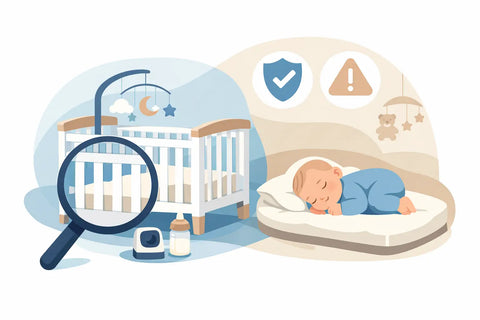
The first time you stand over an empty nursery cot, the question feels less theoretical and more urgent: are cots safe for babies? The reassuring answer is yes - when the cot is well designed, correctly assembled and used with the right mattress and bedding. A safe cot gives your baby a protected sleep space with firm support, secure sides and fewer hazards than many improvised alternatives.
That said, not every cot on the market offers the same level of protection. Safety depends on the product itself, but also on how it is set up at home and how your baby’s needs change as they grow. For new and expecting parents, that is where confident buying matters.
Are cots safe for babies when used properly?
In most cases, a cot is one of the safest places for a baby to sleep. It creates a clearly defined sleep environment, helps prevent falls once babies begin to roll, and keeps pillows, adult bedding and soft surfaces out of the picture. Compared with sofas, adult beds or makeshift sleeping spots, a properly selected cot is a much safer choice.
The key phrase here is properly selected. A beautiful cot is not automatically a safe one, and a premium finish means little if the structure, spacing or materials are not right. Parents should look beyond appearance and focus on tested safety standards, sturdy construction and practical features that support safe everyday use.
A well-made cot should feel stable, with no wobbling or weak joins. The side panels should be secure, and the mattress base should sit evenly without shifting. If a cot rattles, creaks excessively or feels flimsy during assembly, that is worth taking seriously.
What makes a baby cot safe?
A safe cot starts with solid engineering. The frame should be strong enough to handle regular use without loosening over time, especially in busy family homes where furniture gets moved, cleaned around and adjusted. Good-quality materials matter here, not just for durability but for peace of mind.
The spacing of the slats is another important detail. Gaps that are too wide can create a risk of trapping a baby’s limbs or head. The sides should be high enough to contain a baby safely, particularly once they start pulling themselves up. As babies become more mobile, a cot that allows mattress height adjustment becomes especially useful, because it lets parents lower the sleep surface and reduce the chance of climbing or falling.
Surface finishes matter too. Smooth edges, non-toxic coatings and well-fitted components all contribute to a safer nursery environment. Babies chew, kick, rub and explore with their hands and mouths, so every detail should be made with that reality in mind.
For many parents, safety also includes hygiene. Materials that are easier to wipe down and maintain can make a real difference in a warm, humid climate such as Singapore, where cleanliness and airflow are part of daily comfort.
The mattress fit matters more than many parents realise
Even a strong cot can become unsafe with the wrong mattress. The mattress should fit snugly inside the cot with no significant gaps around the sides. If there is too much space between the mattress and the frame, a baby could roll into that gap.
A firm mattress is generally the better option for infant sleep. Soft, heavily padded sleep surfaces may sound more comfortable to adults, but babies need stable, even support. The mattress should lie flat and keep its shape without sagging in the middle.
This is one reason many parents prefer to buy cots and compatible mattresses from a specialist baby brand rather than mixing products from different sources. Better fit means fewer unknowns.
Common cot safety mistakes at home
Often, the cot itself is not the problem. The risk comes from what gets added to it.
One of the most common mistakes is overfilling the cot with extras. Cot bumpers, loose blankets, large toys and decorative cushions may look cosy in a styled nursery, but they do not belong in a newborn sleep space. Babies need a clear, uncluttered area.
Another issue is poor assembly. Even a certified cot needs to be put together exactly as intended. Missing screws, loose fittings or incorrect mattress height settings can change how safe the cot really is. It is worth checking the frame regularly, especially after moving it or adjusting the base.
Parents sometimes keep using a cot setup long after their baby has outgrown part of it. For example, the higher mattress setting that makes life easier with a newborn may no longer be suitable once a baby starts sitting or standing. Cot safety is not static - it changes with development.
Are second-hand cots safe for babies?
Sometimes yes, sometimes no. A pre-owned cot can be a sensible option if it is from a trusted source, still structurally sound and compliant with current safety expectations. But there are trade-offs.
Older cots may have wider slat spacing, worn hardware or damage that is not obvious at first glance. Paint and finishes may also be questionable if the cot is very old or has been heavily used. If any part is missing or if the frame has been modified, it is better not to take the risk.
A second-hand cot should also be paired with a fresh, properly fitting mattress rather than an old one that may have softened, sagged or lost hygiene quality over time.
How to choose a cot with confidence
For most families, buying a cot is both a safety decision and a lifestyle decision. You want something secure, but you also want it to suit your space, your routine and the overall look of your home.
Start with safety credentials. Look for a cot made from child-safe, non-toxic materials and built to recognised standards. Then assess the practical details: adjustable mattress heights, stable construction, smooth finishes and a shape that works well in your nursery without crowding the room.
It is also worth thinking about longevity. Some cots are designed to serve families well beyond the newborn stage, which can be helpful if you want a more durable nursery investment. The best choice is not always the one with the most features - it is the one that combines everyday usability with reliable safety.
For design-conscious parents, there is no need to choose between safety and style. A modern cot can still feel premium and look beautiful in a carefully planned nursery. Clean lines, thoughtful materials and family-friendly function can absolutely go together.
Are cots safe for babies in small homes or shared rooms?
Yes, provided the cot fits the space properly and is positioned thoughtfully. In flats and compact bedrooms, parents sometimes worry that a full cot will be awkward or restrictive. In reality, a well-sized cot often creates more structure, not less.
The main thing is placement. Keep the cot away from curtain cords, blind pulls, heaters, dangling decor and furniture edges that could create hazards. Make sure there is enough room to lift your baby in and out comfortably, especially during night feeds and nappy changes.
In shared rooms, a cot can be a practical way to keep your baby close while still maintaining a separate sleep surface. That separation is often what helps keep sleep safer and more manageable.
When a cot may no longer be the right fit
A cot is safe for babies, but only for as long as it still matches their developmental stage and behaviour. Once a child becomes more active, starts attempting to climb, or exceeds the cot’s recommended limits, parents should reassess.
This is why checking product guidance matters. Height, weight and mobility all play a role. If your child is trying to swing a leg over the side, the conversation is no longer just about comfort or routine - it is about preventing falls.
Good nursery planning includes knowing when to move on, not just what to buy first.
Choosing your baby’s cot can feel emotional because sleep safety sits at the centre of daily life. But confidence usually comes from looking at the basics rather than the marketing - a sturdy frame, safe materials, a snug mattress fit and a setup free from extras. For parents who want a nursery that feels calm, modern and genuinely child-safe, that is the combination worth trusting. At RaaB Family, that is exactly the standard thoughtful families should expect.